
Genesee 72-Hour Release Answer
No official Genesee County rolling 72-hour release page was verified as of July 23, 2026. The GCSO Corrections Division site offers neither a recent-release button nor a public historical jail roster. It states no three-day display rule, update frequency, booking-photo practice, or retention window. Adding “72 hours” to a private roster search does not turn it into an official Sheriff record.
The wider period still helps organize a real inquiry. Define the three calendar dates, identify the exact booking episode, and collect the court actions tied to that admission. One person can have more than one recent case or booking. Release authority in one case may coexist with a hold in another. The Sheriff transaction remains the best source for the physical out event, while a signed order explains the legal basis.
Check Genesee Three-Day Releases
Work from the newest known custody fact toward durable records. The local phone call can resolve whether a person remains booked. Court entries can show bond, dismissal, time served, probation, or prison commitment. VINE may show a participating agency's status event. A county request can then ask for the booking and release transaction across the specific date range.
- Write down the full three-day period, including the year, and identify the person's full booked name, date of birth, and booking number if known.
- Call GCSO inmate information at 810-257-3426. Ask about the specific admission, not only the name.
- Search the 67th District Court route for district events and the Seventh Circuit Court route for felony proceedings.
- Check Michigan VINE for the correctly matched person and source agency. Use its wording without adding a release reason.
- Submit a narrow request through Genesee County FOIA when the out date, time, disposition, or destination needs written support.
Ask GCSO both whether local booking ended and how the exit was recorded. The second answer matters. Community release, work release, tether, state transfer, another-county pickup, and federal movement have different meanings. If only today's activity matters, the Jail Releases: 24 Hours route gives a tighter same-day checklist.
Note: Search every likely case in the range because one release order may not clear a separate hold or booking.
Genesee 72-Hour Record Fields
There are no verified public 72-hour feed columns. The fields below are instead appropriate items for a request directed to the actual local booking. Not every field will exist, remain retained, or be public. Asking for records “if maintained” avoids claiming a fixed GCSO schema. The booking number and a short date range reduce the risk of mixing separate admissions.
| Field to request | Use in a three-day check |
|---|---|
| Full booked name and aliases | Helps distinguish the correct person and spelling. |
| Booking number | Separates one admission from another close in time. |
| Admission date and time | Fixes the start of the custody episode. |
| Court and case numbers | Connects the booking to the controlling court records. |
| Release date and time | May document when local physical processing ended. |
| Release code, authority, or destination | May distinguish a community exit from program placement or transfer. |
A focused request may seek the booking sheet, jail-register entry, and release screen or transaction for the named person and interval. Request electronic delivery if preferred. Michigan FOIA permits certain labor, copy, media, and mailing charges, but the research supports no flat release-record price. A county response may grant, partly grant, deny with reasons, or state that no responsive record is held.
Genesee Weekend Release Timing
A weekend or holiday can separate several timestamps. A judge may enter or sign an order, jail staff may complete administrative steps later, and a public court index may update on the next business day. Genesee County publishes no policy promising a release hour or a substitute Friday release. Do not infer one from general jail practice elsewhere.
The best three-day chronology lists each known event without forcing them into one timestamp. Record when bond was changed or posted, when the case register updated, when GCSO confirmed the person was no longer booked, and when any receiving system first displayed the person. If these facts conflict, ask for the signed order and the Sheriff's release transaction. Those records explain different parts of the event.
A court label such as “case closed” is not a jail-door time. Likewise, a VINE alert is a custody notification rather than a certified court judgment. Each source should be used for the fact it owns.
The court branch also matters. District records cover misdemeanor cases, preliminary felony events, and many bond actions. Circuit records preserve felony proceedings and judgments after bind-over. A person may have entries in both systems during one three-day interval. Search by the known case number where possible, then compare the dates and the named court with the booking data. Neither court supplies the Sheriff's physical out timestamp, but together they can explain why an exit was authorized or why another commitment remained.
Note: No verified Genesee rule guarantees that weekend releases will appear in any public system within a set number of hours.
Genesee Releases Across Custodians
A Genesee County departure can branch into several systems. The Sheriff handles the county Jail, Flint City Lockup, Work Release, Tether, and Work Detail. OTIS becomes relevant only after MDOC jurisdiction exists. BOP covers federal imprisonment, while ICE's locator addresses current immigration detention. The facts of the case should support a federal branch before it is searched.
| Known event | Next check | What not to assume |
|---|---|---|
| Bond, dismissal, or time served | GCSO release transaction and court order | An order alone may precede physical processing. |
| MDOC prison commitment | OTIS after state reception | Leaving the county jail is not community release. |
| Tether or work release | Program record and court order | Being outside a cell is not final discharge. |
| Other warrant or federal hold | Named receiving agency | Local absence does not end confinement. |
OTIS explicitly excludes county-jail-only and city-lockup-only cases. Its “Parolee” status means release from state prison to community supervision. “Discharged” means MDOC supervision ended within the public display period. Neither status reconstructs an unrelated Genesee County booking.
Genesee Release Data Gap
The Sheriff's site directs users to OTIS even though many people held at the Jail or Flint City Lockup never enter the MDOC database. That unusual local gap makes a phone-centered process necessary. A negative OTIS search cannot confirm a county release. It may reflect a jail-only sentence, no state commitment, delayed intake, identity mismatch, or an older state discharge outside OTIS's display scope.
For the three-day window, combine GCSO, Michigan VINE, the correct court branch, and County FOIA. VINE is strongest when registration occurs before an expected status change. The court record shows authority. The release transaction shows the physical out event. OTIS verifies a later state status only where MDOC received the person.
The official GCSO page is the manifest-matched image for this topic because it documents the contact route and the absence of a public recent-release control.
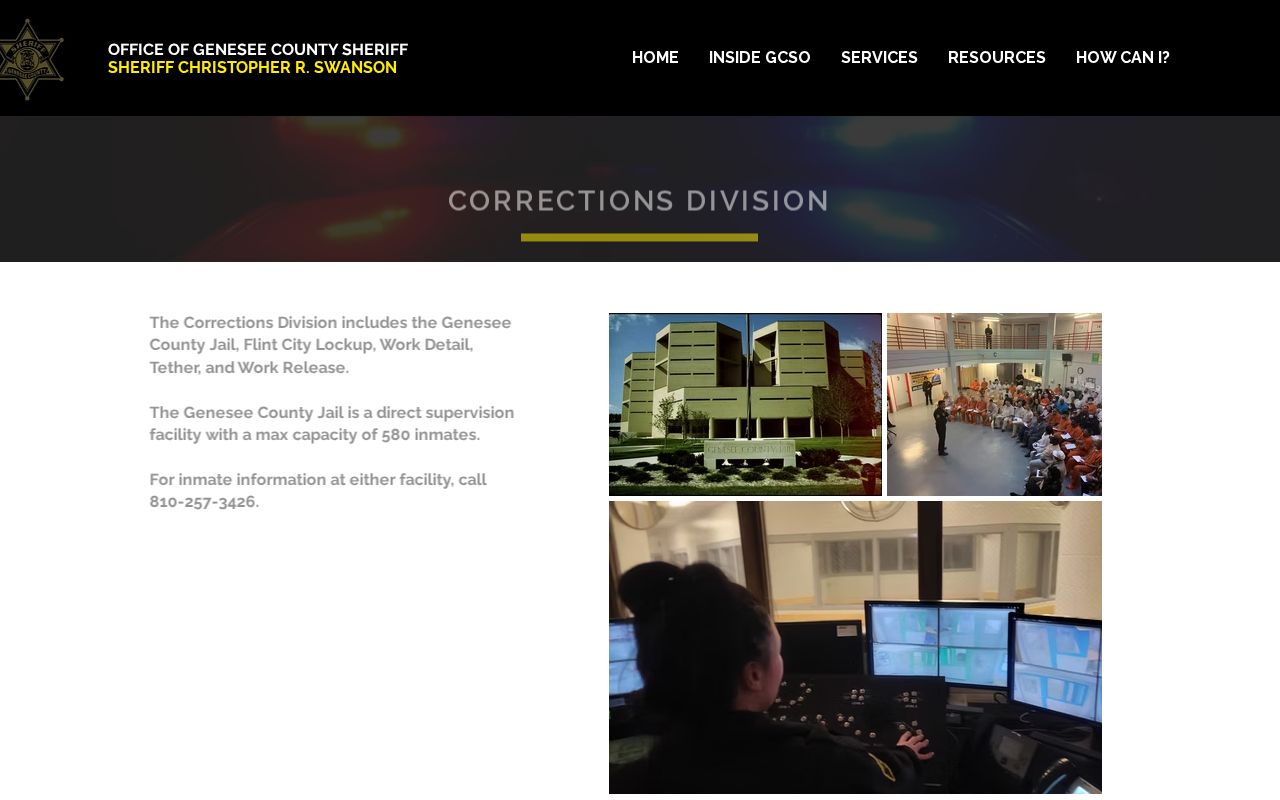
The source supports a records-based three-day check, not an invented screenshot of names released during that span.
Confirm Genesee Three-Day Records
Match identity before reaching a conclusion. Common names need a date of birth, age, booking or MDOC number, case number, offense, and source agency. Do not merge two people because their names and county match. If identifiers conflict, the honest result is “not confirmed” until the originating record resolves the difference.
A useful proof set contains the Sheriff transaction for the physical exit, the signed court order for legal authority, and a receiving-system record when custody continued elsewhere. Michigan VINE adds status notice but not certification. This layered record is more reliable than a time-window roster and remains useful after three calendar days have passed.
When requesting the local transaction, include the full name, date of birth, approximate admission, and exact three-day release range. Identify the booking sheet, jail-register entry, and release transaction by name. Ask for the release date and time, recorded disposition or authority, and receiving agency if those fields exist and are nonexempt. This wording does not assume that GCSO keeps a public feed or a fixed field schema.
Older or state records require a different owner. MDOC FOIA handles identified state prison, parole, and discharge documents, while the sentencing court keeps the signed judgment and later orders. A county request should not be expected to produce a state discharge certificate. Keeping each request with the agency that created the record reduces delay and makes the final chronology easier to verify.
Public Record Search
Sponsored Results